




That’s where pet product co-packing services in St. Louis, MO become a practical way to add packaging capacity without building every process in-house.
However, outsourcing has to be managed well. Product specifications, materials, handling requirements, and quality checks need to be agreed on before a run begins.
Professional co-packing services in St. Louis, Missouri can help simplify these operational challenges.
At Elite Printing & Packaging, Inc., we understand how packaging and distribution work together. Our one-stop model connects printing, packaging, co-packing, and fulfillment, helping brands coordinate more of the product journey through one partner.
In this article, we’ll explore how pet product co-packing works, what to prepare before a run, and how to evaluate a packaging partner in the St. Louis area.
Co-packing, also called contract packaging, is when a business hires a specialist to package its product. Depending on the product and the provider’s capabilities, the work may include filling, sealing, labeling, coding, assembling multipacks, and preparing orders for shipment.
For pet brands, formats and services may include vertical form fill and seal (VFFS) pouching, pillow packs, sachets, tubs, jars, multipacks, and kitting. A co-packer may also apply labels, print lot codes, or assemble retail assortments. For example, a pet treat brand could have a provider fill treat pouches, apply lot codes, pack them into cases, and prepare the cases for retail or e-commerce distribution.
Co-packing is different from co-manufacturing. A co-packer packages a product made by the brand or another manufacturer. A co-manufacturer typically makes the product itself, which may include blending ingredients or producing the formula. Some providers offer both, so brands should clarify which activities are included in a project.
The exact workflow depends on the product, packaging format, and project scope. A typical process includes:
Request for quote and specification review. The brand shares a request for quote (RFQ), product details, forecast quantities, packaging specifications, and shipment requirements.
Packaging format selection. The parties confirm the package type, size, fill weight, closure, and any features such as a resealable zipper.
Artwork and print proofing. The brand approves the packaging design and print proof, including the correct product information, artwork version, and code area.
Material sourcing. The team confirms which packaging materials are needed, who will supply them, and when they must arrive.
Trial run and first-article approval. A first article, or initial finished sample, is checked against the agreed specification before the full run proceeds.
Production and in-process quality checks. The production team follows the run instructions and checks agreed items such as fill weight, seal quality, label placement, and lot-code legibility.
Shipment or fulfillment handoff. Finished goods are packed into cases, palletized if required, and transferred for retailer shipping, e-commerce fulfillment, or storage.
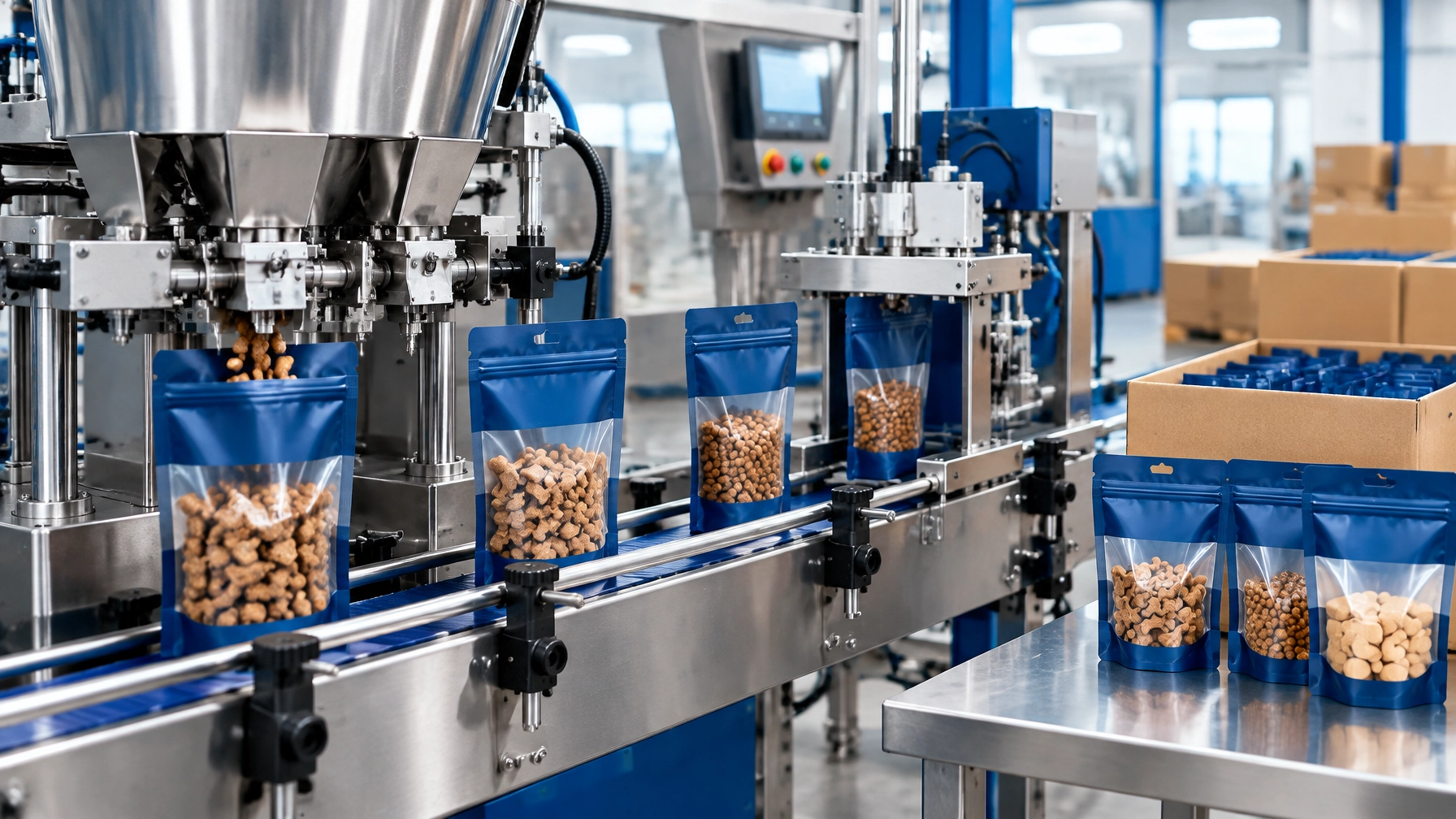
The cost of a run depends on factors such as product type, quantity, package format, material sourcing, setup, labor, quality requirements, and whether kitting or fulfillment is included. A simple pouch run and a multi-SKU retail assortment involve different equipment, handling, and inspection needs. Actual costs depend on the project’s specifications and quantities, so brands should request a quote based on a complete product brief.
Packaging format | Typical pet products | Why brands choose it |
|---|---|---|
Stand-up pouch | Treats, kibble samples, pet supplements | Shelf-facing presentation, flexible sizes, and optional resealable closures |
Flat or pillow pack | Single treats, chews, samples | Compact format for individual portions or promotions |
Sachet | Powder supplements, samples, toppers | Convenient single-use portions |
Tub | Treats, chews, supplements | Rigid container for products needing a sturdy pack |
Jar | Powder supplements, treats | Familiar container with a wide opening for access |
Multipack or shrink-wrapped case | Variety packs, bundled products | Groups products for retail or promotional programs |
Retail display-ready case | Treats, food, supplements | Helps prepare a product assortment for store presentation |
The right format depends on product characteristics, storage and shipping conditions, how customers use the product, and retailer specifications. Flexible packaging solutions and filling options should be reviewed alongside the product’s protection and handling needs.
Pet owners often read labels closely to understand ingredients, feeding guidance, product claims, and which animals the product is intended for. Clear, legible packaging helps them find that information and make a confident choice.
Package performance matters after purchase, too. Seal integrity helps protect contents from exposure during storage and handling. Resealable features can make a larger pouch more convenient between uses, while clear portion information helps customers understand how to serve the product.
If a pouch leaks, a seal opens, or a label is hard to read, the issue can quickly affect a customer’s confidence in the brand. In pet products, the package is connected to how people care for an animal, so consistent quality and accurate information are essential parts of the customer experience.
Pet products vary widely, from dry treats and kibble to powders, supplements, and moist products. Packaging plans should account for the product’s physical properties and the requirements of the specific production environment.
Key considerations include:
Food safety and product separation: Ask how the facility manages pet and human food products, including receiving, storage, production scheduling, cleaning, and cross-contamination controls. Do not assume products are handled on separate lines; confirm the actual procedures.
Allergen and protein-source control: Products with different proteins or other sensitive ingredients may require documented handling and changeover practices. The product’s risk profile should guide the controls.
Film performance: Fats and oils can affect packaging materials, while kibble may abrade film during filling and transport. The film structure and seals should be suitable for the product and distribution conditions.
Moisture management: Treats with different moisture characteristics may have different protection needs. Confirm the package material and seal requirements with the packaging team.
Supplement dosing: Powders and other supplements need defined fill weights and tolerances, along with a filling process appropriate to the product.
Certification and product documentation: For products represented as Organic or Kosher, confirm the documentation and handling requirements relevant to the product and facility. The exact scope should be checked before production.
Brands are responsible for ensuring their product and label meet applicable requirements. The FDA’s pet food guidance and animal food safety information provide regulatory background. Requirements can depend on the product and activity, so brands should consult qualified regulatory counsel when needed.
St. Louis sits at the convergence of major Midwest routes, including I-44, I-55, I-64, and I-70. The network can support distribution planning to markets such as Kansas City, Chicago, Indianapolis, and Memphis. Actual freight timing and cost depend on the destination, carrier, shipment size, and service level. The St. Louis Regional Freightway outlines the region’s interstate connections.
Brands in St. Charles, Chesterfield, Maryland Heights, and Hazelwood may also find it useful to evaluate packaging and fulfillment partners within the broader metro area. For companies selling both online and through retail, coordinating packaging, inventory, and shipping in the region can help simplify planning across channels.
A clear handoff helps a co-packer plan production and identify open questions before materials reach the line. Prepare these details:
Finished product specification: Include product description, handling instructions, and any special storage needs.
Nutrition and label compliance: Have your regulatory team review required product information, claims, and the final label.
Artwork and dielines: A dieline is the layout showing how packaging is cut, folded, or formed. Provide the approved file and version.
Material selection and lead times: Confirm material construction, sourcing responsibilities, and delivery dates.
Fill weights and tolerances: Specify target weights and acceptable variation.
Seal and integrity testing: Agree on the checks appropriate for the product and package.
Code and lot rules: Define code format, placement, legibility, and traceability requirements.
Case pack and pallet configuration: Confirm units per case, case labeling, and pallet instructions.
Storage conditions and order quantities: Share storage requirements and discuss minimum order quantities with the provider.
Launch timeline: Work backward from the desired ship date, allowing time for proofing, material arrival, trial approval, production, and freight.
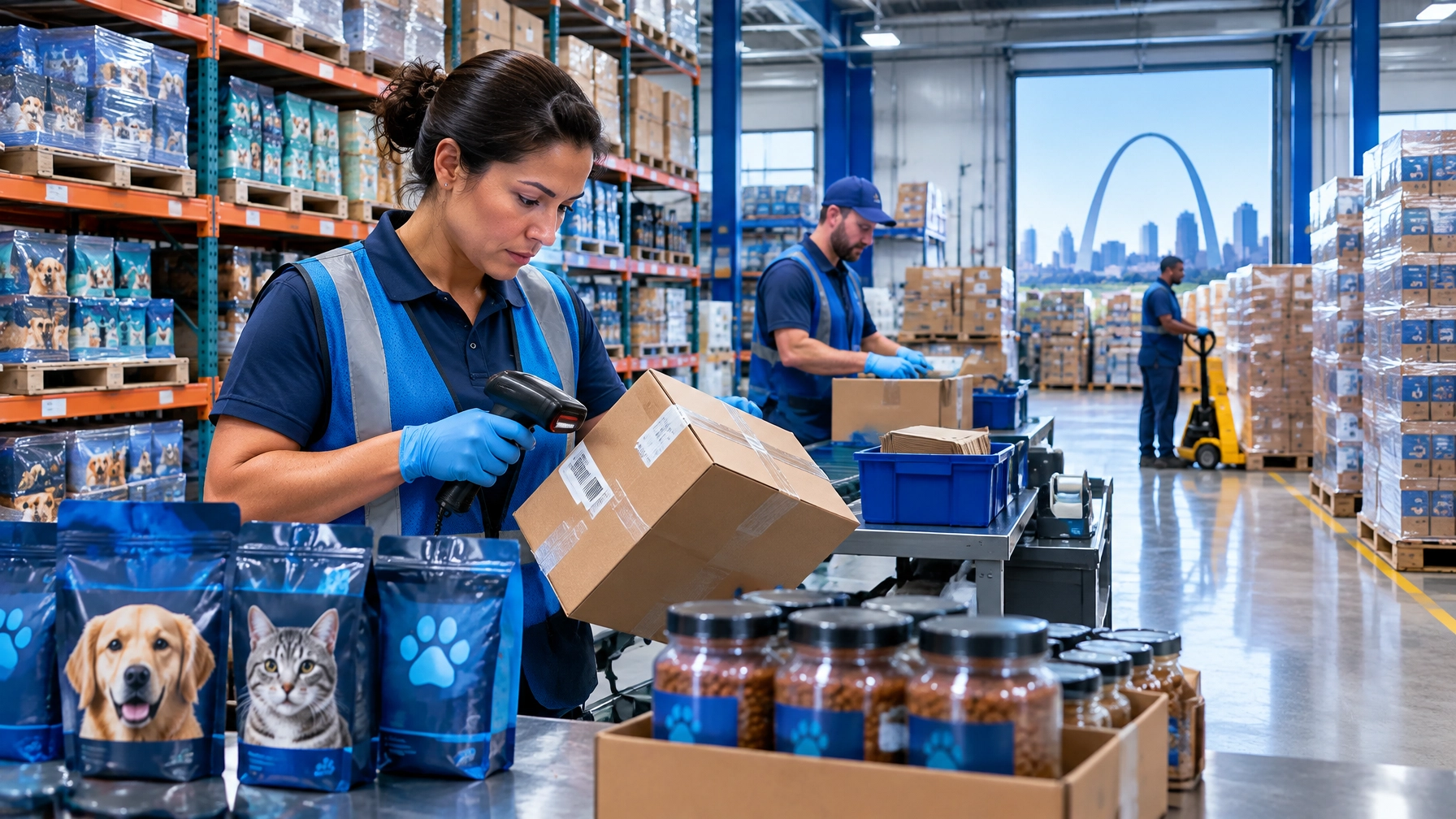
When comparing a pet food packaging company or searching for “co packing near me,” evaluate the process, facility, and service fit, not just location. Ask whether a provider can handle the product and package format, what its changeover and sanitation procedures cover, and how it prevents product or label mix-ups.
Review certifications and their scope. Elite lists Certified Organic, Kosher, GMP, Blue Food Safety, and MARS credentials. FDA requirements and facility registration are not a single blanket certification, so clarify which requirements apply to the provider’s activities and your product. Ask to see current documentation relevant to the project.
Also discuss lot traceability and recall readiness, flexible minimums, realistic lead times, and whether printing is handled in-house or through another supplier. If you need shipment storage, e-commerce or retail fulfillment, and lot tracking, confirm those services can be coordinated. References and a facility visit can help you assess communication, cleanliness, workflow, and how the team handles production questions.
As a pet brand grows, one product can become many: different sizes, flavors, multipacks, subscriptions, and retail assortments. Each variation adds packaging components, specifications, and planning requirements.
Coordinating print, packaging, co-packing, and fulfillment with multiple vendors can create extra handoffs. A connected workflow can make it easier to align approved artwork, packaging materials, production, lot control, and shipment preparation. Elite offers services such as VFFS pouching, jar and tube filling, and kitting and assembly, subject to project requirements.
Scaling pet product packaging involves more than increasing production volume. It calls for clear specifications, dependable quality checks, and coordination from printed materials through shipment.
Elite Printing & Packaging, Inc. brings printing, packaging, co-packing, and fulfillment together, with traceable lot control, flexible minimums, and experience serving pet and human food brands.
Ready to review your next production run? Visit Elite Printing & Packaging, Inc. to learn more and discuss your product, packaging format, and distribution needs.
Pet product co-packing is the outsourced packaging of pet food, treats, or supplements. Services may include filling, sealing, labeling, coding, multipack assembly, and preparing cases for shipment.
Some providers offer flexible minimums, while others may require quantities that fit their equipment and schedules. Ask about minimum order quantities, trial runs, setup requirements, and how the provider handles multiple SKUs.
Cost depends on the product, order quantity, package format, materials, setup, quality checks, and any kitting or fulfillment services. Request a project-specific quote based on your specifications and scope.
The right credentials depend on the product and project. Ask about relevant certifications, such as Certified Organic, Kosher, GMP, Blue Food Safety, or MARS, and confirm their scope; clarify applicable FDA requirements rather than treating FDA as a single certification.
Some providers serve both categories, but brands should ask how the facility controls product separation, sanitation, allergens, and changeovers. Confirm the procedures and documentation that apply to the specific product and production environment.
Search for co-packing providers serving the St. Louis metro, then compare product experience, packaging formats, traceability, quality procedures, minimums, and fulfillment options. A facility visit can help you evaluate whether the operation fits your requirements.


