

In today’s competitive retail environment, brands have only seconds to capture a shopper’s attention. Whether customers are browsing grocery aisles, walking through big-box stores, or exploring specialty retail locations, effective product presentation can make the difference between a missed opportunity and a purchase.
That’s where point-of-purchase (POP) display assembly in St. Louis, MO becomes an important component of retail marketing success.
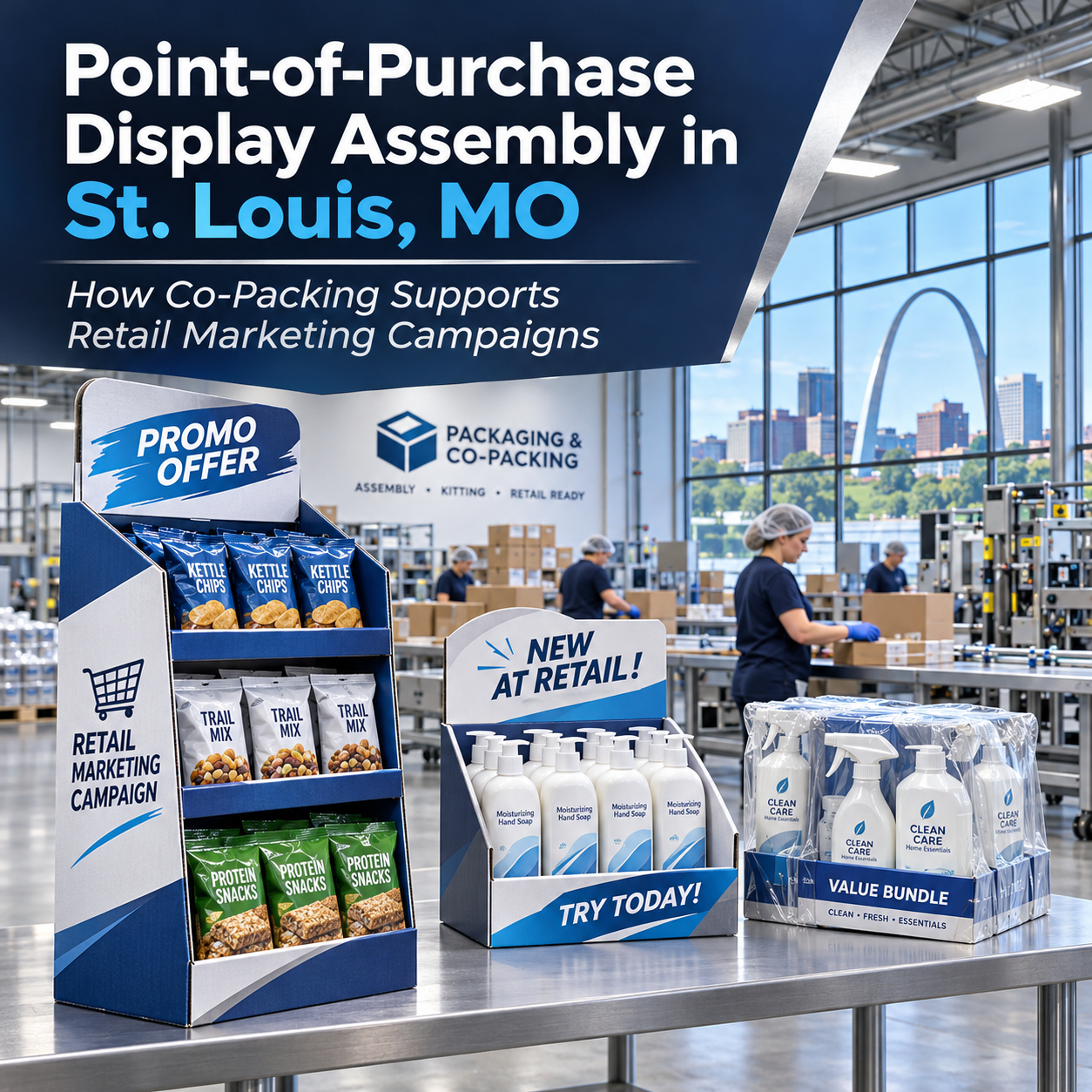
Point-of-purchase displays are strategically positioned merchandising units designed to showcase products, highlight promotions, and encourage purchasing decisions. From countertop displays and freestanding floor units to seasonal promotional displays and retail endcaps, these marketing tools help brands stand out in crowded retail environments.
However, creating an attractive display is only part of the process.
Brands must also ensure products are accurately packed, properly assembled, securely transported, and delivered according to retailer specifications and promotional deadlines.
Professional co-packing services in St. Louis, Missouri can help simplify these operational challenges.
At Elite Printing & Packaging, Inc., we understand how packaging operations and retail marketing objectives work together. By integrating contract packaging, product kitting, display preparation, and retail-ready packaging strategies, businesses can improve operational efficiency while supporting successful promotional campaigns.
In this article, we’ll explore how point-of-purchase display assembly works, why co-packing matters, and how St. Louis businesses can develop more efficient retail marketing campaigns.
Point-of-purchase display assembly is the process of preparing, constructing, stocking, and packaging promotional product displays for placement in retail environments.
Unlike traditional product packaging, which primarily protects merchandise during storage and transportation, POP displays combine product presentation with marketing functionality.
These displays are designed to attract attention, communicate promotional messages, and make products accessible to shoppers.
A typical POP display assembly project may involve several steps:
Receiving promotional display components and packaged products.
Assembling cardboard, corrugated, or other display structures.
Organizing products according to approved merchandising layouts.
Adding promotional signage, inserts, labels, or branded materials.
Verifying product quantities, positioning, and presentation.
Preparing completed displays for protective shipping and distribution.
Depending on the campaign, displays may arrive at retail stores fully assembled, partially assembled, or packaged as kits for store employees to complete.
For businesses launching retail promotions throughout Missouri and the Midwest, coordinating these activities through an experienced co-packing partner can help reduce complexity and improve consistency.
1. Freestanding Floor Displays
Standalone promotional structures placed in high-traffic retail areas. They can feature multiple product varieties, seasonal promotions, or new product launches. Co-packing teams can assemble and stock these displays before distribution.
2. Countertop POP Displays
Compact merchandising units positioned near checkout counters or customer service areas. These displays are particularly useful for smaller products and impulse purchases, including snacks, cosmetics, and accessories.
3. Retail Endcap Displays
Promotional arrangements located at the ends of store aisles. Endcaps provide additional product visibility and are frequently used for limited-time offers, product launches, and seasonal campaigns.
4. Pallet and Quarter-Pallet Displays
Preloaded merchandising units designed for efficient movement and retail placement. These displays can reduce store-level stocking requirements when properly assembled, secured, and shipped.
Each display format presents unique assembly, packaging, and transportation requirements. Choosing the appropriate co-packing strategy helps ensure promotional displays remain attractive, functional, and retailer-ready.
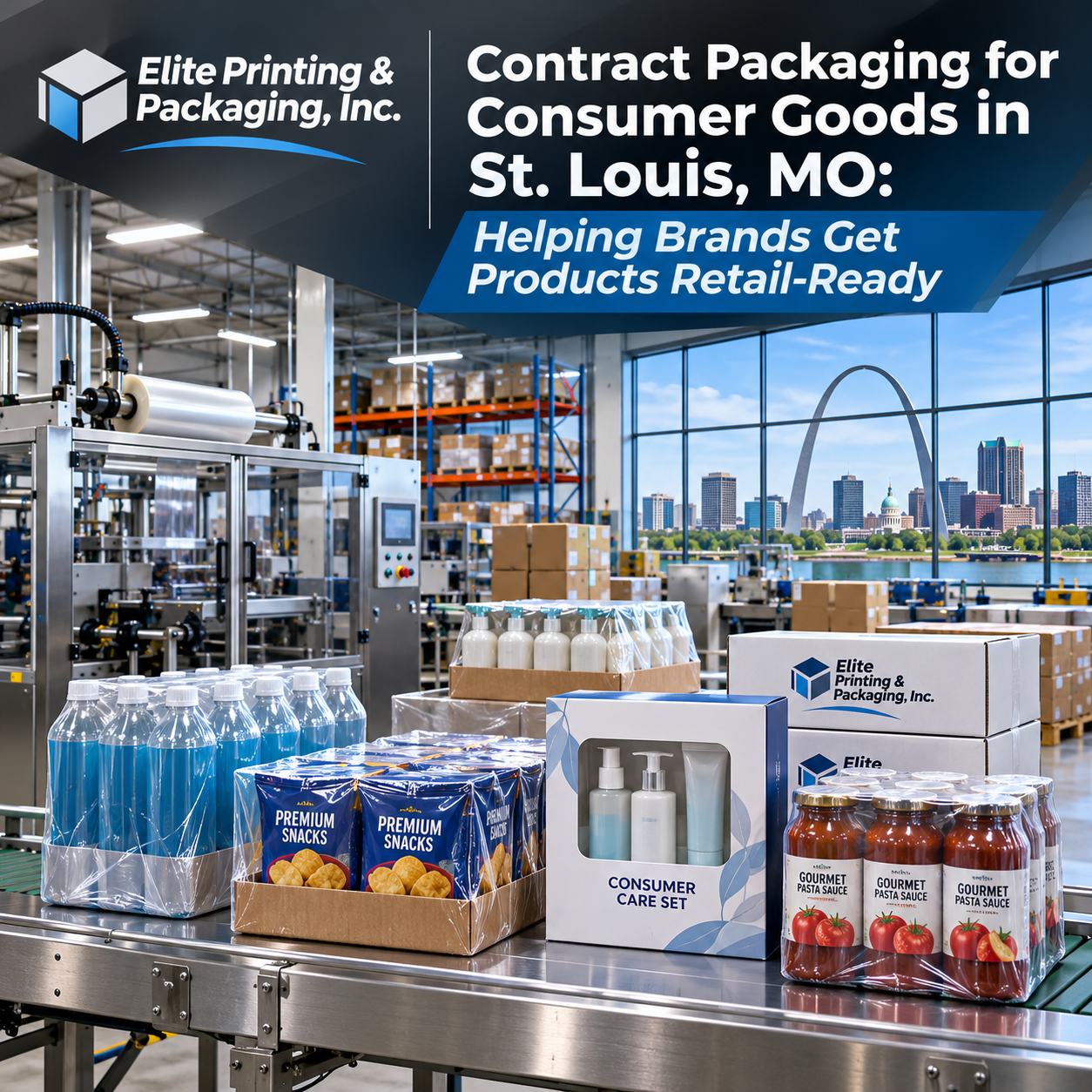
Co-packing, also known as contract packaging, involves outsourcing packaging-related operations to a specialized service provider.
For retail marketing campaigns, co-packing can extend beyond traditional product packaging to include display assembly, promotional kitting, product bundling, labeling, and shipment preparation.
This integrated approach helps businesses coordinate multiple activities without managing every step internally.
Assembling hundreds or thousands of promotional displays can require significant labor, workspace, equipment, and coordination.
Without a dedicated process, businesses may encounter production delays, inconsistent display configurations, and inefficient material handling.
A professional co-packing operation can establish repeatable assembly procedures to support accuracy and productivity.
For example, a consumer goods brand preparing a regional retail promotion may need 1,000 identical displays containing several product varieties.
A structured assembly workflow can help ensure each display follows the same approved product layout, contains the correct quantities, and meets packaging requirements before shipment.
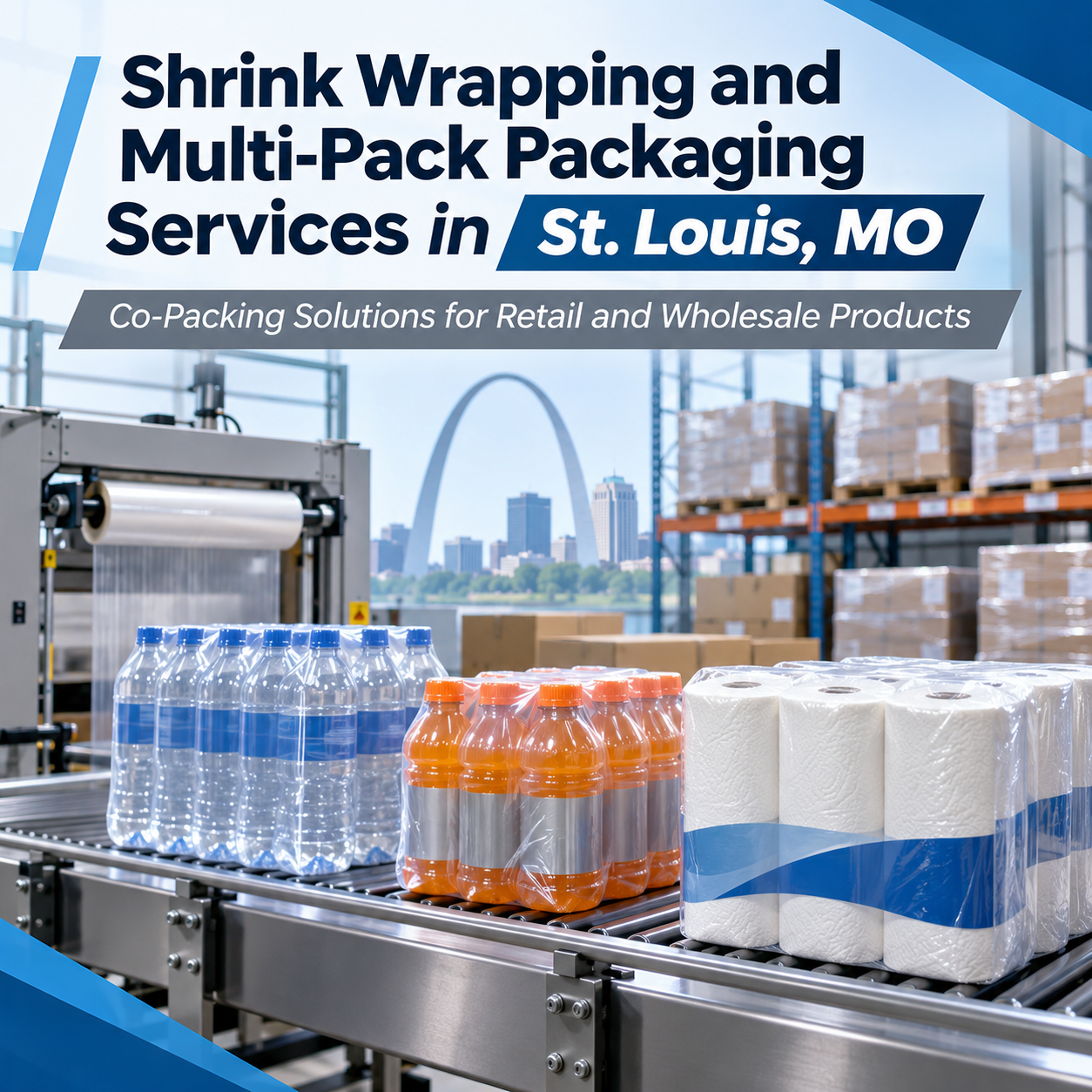
Retail marketing campaigns often require multiple products or promotional components to be packaged together.
Product kitting may include:
Combining several product varieties into one promotional display.
Inserting coupons, samples, or marketing materials.
Preparing limited-edition product bundles.
Organizing merchandise into retailer-specific assortments.
Adding promotional labels or branded packaging components.
Through product kitting services in St. Louis, MO, businesses can consolidate these activities into a coordinated packaging workflow.
This can reduce internal handling requirements and help ensure promotional materials are included consistently.
Retail displays must look professional when they arrive at stores.
Damaged products, incorrect quantities, missing signage, or improperly assembled structures can undermine a marketing campaign before shoppers even see it.
Quality control is therefore an essential part of POP display assembly.
Depending on the project, quality checks may include confirming product counts, verifying label placement, inspecting display structures, checking promotional inserts, and reviewing shipment preparation.
A consistent quality control process helps brands maintain their visual identity across multiple retail locations.
St. Louis offers geographic advantages for businesses coordinating retail marketing campaigns throughout Missouri and neighboring states.
Located near major interstate transportation corridors, including I-44, I-55, I-64, and I-70, the metropolitan area provides access to important regional distribution routes.
For brands distributing products across the Midwest, a St. Louis-based packaging operation may help simplify logistics coordination.
St. Louis is positioned to support distribution planning for markets such as Kansas City, Chicago, Indianapolis, Memphis, and other regional destinations.
Actual transportation costs and delivery times depend on shipment volume, carrier availability, destination, and service requirements.
However, coordinating packaging and display preparation in a centrally located region can help businesses evaluate opportunities to streamline distribution.
The St. Louis area supports a diverse business environment that includes manufacturing, food and beverage production, consumer products, and logistics operations.
These industries frequently require packaging services for product launches, seasonal promotions, and retail distribution.
Working with a local contract packaging company in St. Louis, MO can provide opportunities for closer communication, coordinated production schedules, and more direct oversight of packaging projects.
Retail promotions often involve fluctuating production requirements.
A brand may need a relatively small number of displays for a regional product launch, followed by a significantly larger quantity for a holiday campaign.
Co-packing services can help businesses plan labor, materials, assembly procedures, and shipment preparation around these changing demands.
Point-of-purchase displays do more than hold products. They connect a brand’s marketing strategy with the physical shopping experience.
Effective display preparation supports several important marketing objectives.
Retail shelves are crowded with competing brands.
Strategically positioned POP displays can create additional opportunities for shoppers to notice products outside their traditional shelf locations.
Promotional graphics, coordinated product arrangements, and clear messaging help communicate a campaign’s purpose.
Introducing a new product into retail stores requires coordinated marketing and operational execution.
Brands must ensure products arrive on time, display materials are accurate, and merchandising units are ready for placement.
Co-packing services can help organize the packaging and assembly components required for these launches.
Holiday shopping periods, back-to-school promotions, and other seasonal campaigns often operate within narrow timeframes.
A display that arrives after a promotional event begins may lose much of its intended marketing value.
Coordinated POP assembly and shipment preparation help businesses work toward retailer delivery deadlines and campaign launch dates.
When a promotional campaign includes dozens or hundreds of retail locations, presentation consistency becomes increasingly important.
Standardized assembly instructions and quality checks help ensure displays follow the same approved merchandising configuration.
This supports consistent branding regardless of where customers encounter the products.
Retailers frequently prioritize merchandising solutions that are efficient to receive, handle, and place on the sales floor.
Retail-ready packaging is designed to simplify product presentation and reduce unnecessary handling at the store level.
For POP displays, this may involve preparing units that require minimal additional assembly or stocking after delivery.
Potential advantages include faster display placement, reduced product handling, more consistent presentation, and fewer assembly tasks for retail employees.
However, retailer requirements vary.
Some stores accept fully assembled promotional units, while others require displays to arrive flat-packed or partially assembled.
Understanding these requirements before production begins is essential.
A co-packing partner can help businesses organize their packaging workflow around approved retailer specifications, including display dimensions, labeling requirements, product quantities, and shipping configurations.
Businesses evaluating retail display programs often compare internal assembly operations with outsourced co-packing services.
Both approaches can be effective depending on production volume, available resources, and campaign complexity.
Consideration | In-House Assembly | Outsourced Co-Packing |
|---|---|---|
Labor | Requires internal staffing | Uses external assembly resources |
Workspace | Uses company facilities | May reduce internal space requirements |
Seasonal demand | Requires internal capacity planning | May provide additional capacity |
Quality control | Managed internally | Managed through agreed procedures |
Equipment | Company-owned or rented | May use provider resources |
Coordination | Direct internal oversight | Requires partner communication |
Outsourcing does not automatically guarantee lower costs or faster turnaround times.
Businesses should compare labor expenses, material handling, transportation, quality requirements, and overall project complexity before selecting an approach.
For brands managing frequent promotions or complex product assortments, co-packing may provide valuable operational flexibility.
Several industries use point-of-purchase displays to support retail marketing campaigns.
Food and Beverage: Snack manufacturers, beverage brands, and packaged food companies frequently use displays for seasonal promotions, product introductions, and multipack offerings.
Health and Beauty: Cosmetics, skincare, and personal care brands use countertop displays, product assortments, and promotional kits to introduce products and highlight special offers.
Pet Products: Pet food, treats, grooming products, and accessories can be organized into branded displays that showcase complementary products or seasonal promotions.
Household and Consumer Goods: Cleaning products, home accessories, and everyday consumer merchandise may be featured in floor displays, endcaps, or promotional bundles.
Specialty Retail Products: Gift items, accessories, and other packaged consumer products can benefit from coordinated merchandising arrangements that improve product visibility.
Each category may involve different product handling requirements, display configurations, and packaging materials.
For regulated, fragile, or temperature-sensitive products, brands should verify that a prospective packaging provider has the appropriate capabilities and procedures.
A successful POP display campaign begins well before the first display is assembled.
Brands should develop a coordinated plan that addresses marketing objectives, production requirements, and retail distribution needs.
Determine whether the display is intended to introduce a product, support a seasonal promotion, increase product visibility, or encourage multiproduct purchases.
Clear objectives help guide display design and packaging decisions.
Review approved dimensions, weight limits, labeling requirements, product arrangements, and shipping instructions.
These requirements should be finalized before assembly begins whenever possible.
Identify the number of displays required and the exact products included in each unit.
For campaigns involving multiple retailers, determine whether different display configurations are necessary.
Ensure display structures, products, labels, and promotional materials are available according to the production schedule.
Detailed assembly instructions can help reduce errors and improve consistency.
Establish inspection checkpoints for product counts, display integrity, promotional materials, and shipment readiness.
Determine whether displays will ship fully assembled, partially assembled, or as kits.
Review pallet configurations, protective packaging, carrier requirements, and delivery schedules.
Careful coordination between marketing, packaging, and logistics teams helps reduce avoidable disruptions.
Retail display programs can involve numerous moving parts.
One common challenge is managing multiple product varieties within a single promotional display. Incorrect assortments can create inconsistencies across retail locations.
Another challenge involves maintaining assembly quality during high-volume production.
As campaign quantities increase, businesses must ensure that production speed does not compromise accuracy.
Shipping damage is also a concern. Displays that are inadequately secured or improperly palletized may arrive damaged, requiring additional store-level handling.
Finally, promotional deadlines can create significant pressure.
Co-packing providers can help address these challenges through standardized workflows, coordinated material handling, documented assembly instructions, and project-specific quality checks.
The effectiveness of these processes depends on the provider’s capabilities, the agreed scope of work, and the complexity of the campaign.
Selecting the right packaging partner is an important decision for brands preparing retail promotions.
Businesses should evaluate potential providers based on their operational capabilities, communication practices, and ability to meet project-specific requirements.
Important questions include:
Can the provider assemble the required display format and volume?
Does the facility have sufficient space for product staging and assembly?
Can the team handle multiple SKUs and retailer-specific assortments?
What quality control procedures are available?
Can the provider coordinate labeling, kitting, and protective packaging?
What production lead times and shipping arrangements are realistic?
How are unexpected changes or material shortages managed?
A strong packaging relationship depends on clear expectations and effective coordination.
For companies searching for POP display assembly services in St. Louis, evaluating the complete packaging workflow is often more useful than focusing on assembly pricing alone.
As consumer goods companies expand, packaging operations often become more complicated.
A brand may begin with a single product and eventually manage multiple SKUs, seasonal promotions, retail partnerships, and distribution requirements.
Coordinating these activities through separate vendors can introduce additional communication and scheduling challenges.
An integrated packaging strategy may combine product kitting, bundling, labeling, display preparation, and shipment packaging into a more organized workflow.
For growing brands, this approach can support better production planning and more consistent retail execution.
It also allows internal teams to devote more attention to product development, sales, marketing, and customer relationships.
The goal is not simply to assemble promotional displays.
It’s to build a packaging process that supports the brand’s broader retail growth strategy.
Successful retail marketing campaigns require more than creative promotional displays.
They require accurate product preparation, dependable packaging processes, consistent presentation, and careful coordination.
At Elite Printing & Packaging, Inc., we recognize the important relationship between packaging operations and retail marketing performance.
Businesses planning point-of-purchase promotions can benefit from evaluating how co-packing, product kitting, and retail-ready packaging fit into their overall campaign strategy.
Whether you’re preparing a new product launch, coordinating seasonal merchandise, or exploring more efficient promotional packaging processes, having the right packaging partner can make a meaningful difference.
Our St. Louis-focused packaging solutions are designed to help businesses explore efficient approaches to their packaging and production needs.
Ready to streamline your next retail marketing campaign?
Visit Elite Printing & Packaging, Inc. to learn more about our packaging solutions and contact our team to discuss your POP display assembly, co-packing, and retail-ready packaging requirements.
Let us help you explore a packaging strategy that supports your products, your retailers, and your next promotional opportunity.
Point-of-purchase display assembly involves constructing, stocking, labeling, and preparing promotional merchandising displays for retail environments. These displays help brands present products in strategic store locations.
Co-packing supports retail marketing by coordinating product assembly, promotional kitting, packaging, labeling, and shipment preparation. These services can help businesses improve consistency and manage campaign logistics.
Food and beverage brands, pet product manufacturers, beauty companies, household goods suppliers, and other consumer products businesses commonly use promotional retail displays.
Some co-packing companies offer display stocking, promotional assembly, labeling, and shipping preparation. Businesses should confirm the specific capabilities and retailer requirements with their chosen provider.
St. Louis offers access to major Midwest transportation corridors and regional distribution markets. Working with a local packaging provider may also simplify communication and production coordination.

Bring your vision to life with custom flexible packaging, labels, and retail-ready design.

Premium materials and finishes that elevate your brand.

Efficient, compliant, and versatile co-packing for pet and human products.

From warehouse to doorstep — done right, every time.
Bring your vision to life with custom flexible packaging, labels, and retail-ready design.
Premium materials and finishes that elevate your brand.
Efficient, compliant, and versatile co-packing for pet and human products.
From warehouse to doorstep — done right, every time.