
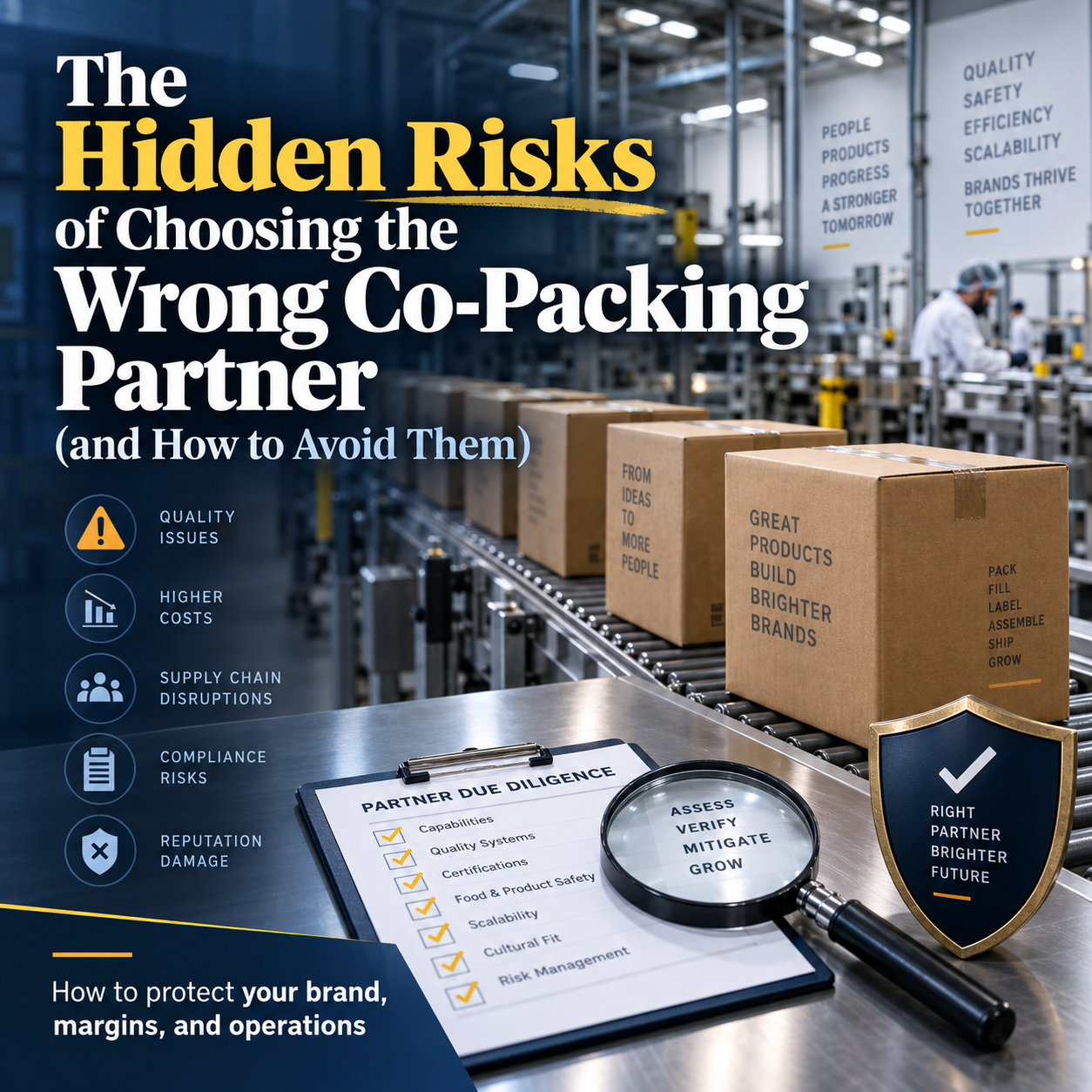
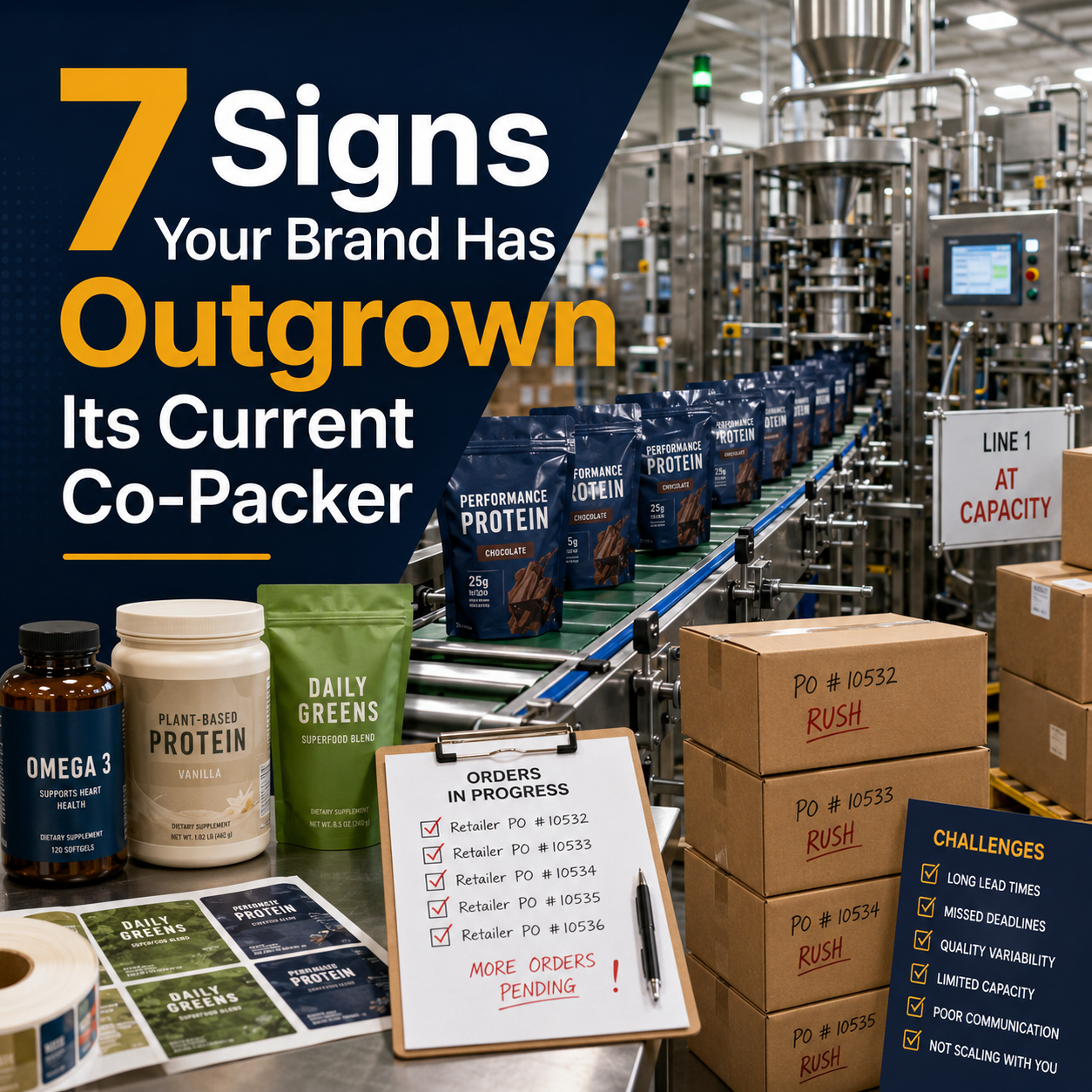
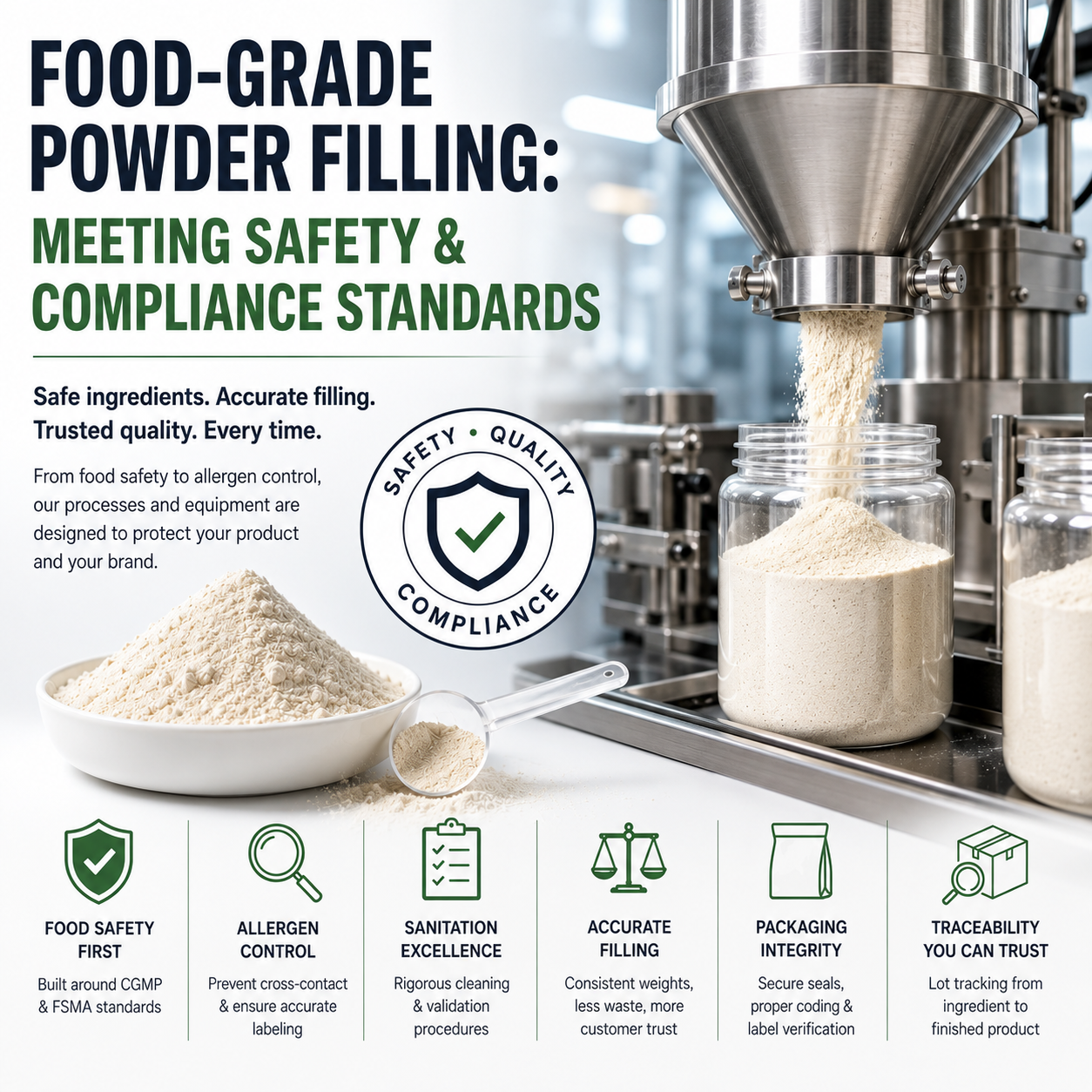

If you’ve ever wondered what co-packing is, when your brand should use it, or how it can accelerate growth, this guide breaks it all down. Whether you’re launching a new product, expanding into retail, or struggling to keep up with demand, co-packing may be the strategic advantage your business needs.
As brands scale, one challenge consistently rises to the top: how to package products efficiently, professionally, and at scale—without losing focus on growth. That’s where co-packing comes in.
If you’ve ever wondered what co-packing is, when your brand should use it, or how it can accelerate growth, this guide breaks it all down. Whether you’re launching a new product, expanding into retail, or struggling to keep up with demand, co-packing may be the strategic advantage your business needs.
Co-packing, short for contract packaging, is when a third-party company packages your product on your behalf. Instead of handling filling, assembling, labeling, kitting, or packing in-house, brands outsource these tasks to a specialized co-packing partner.
Co-packers work with a wide range of industries, including food and beverage, nutraceuticals, cosmetics, personal care, e-commerce, and consumer packaged goods (CPG).
In short:
👉 You focus on building your brand.
👉 Your co-packer handles the packaging execution.
As demand increases, packaging quickly becomes a bottleneck. Brands often reach a point where in-house operations are no longer cost-effective or scalable.
Common challenges include:
Limited labor availability
Rising equipment costs
Inconsistent packaging quality
Slower speed to market
Difficulty meeting retail compliance standards
Co-packing solves these problems by giving brands access to established infrastructure, trained labor, and packaging expertise—without massive capital investment.
Not all co-packing is the same. Most providers offer a mix of services depending on your product and packaging needs.
This involves direct contact with the product, such as:
Filling bottles, jars, or pouches
Sealing bags or containers
Blister packs or sachets
Common in food, supplements, and personal care products.
Secondary packaging supports branding, protection, and retail readiness:
Folding cartons
Shrink wrapping
Display boxes
Multi-packs
This is critical for shelf appeal and compliance.
Ideal for promotions and bundled products:
Subscription boxes
Gift sets
Sample kits
Promotional packs
Includes:
Applying labels
Lot coding and date coding
Barcode and SKU placement
Retail and regulatory compliance
While nearly any physical product brand can benefit, co-packing is especially valuable for:
Food & Beverage brands scaling production
CPG brands entering retail
E-commerce brands managing fulfillment volumes
Health & wellness companies needing strict compliance
Startups launching new products without infrastructure
Co-packers already have equipment, staff, and processes in place. That means faster launches, quicker turnaround times, and fewer delays.
Instead of investing in:
Facilities
Machinery
Labor
Training
You pay only for the services you need—when you need them.
A good co-packing partner scales with your demand, whether you’re producing 5,000 units or 500,000 units.
Packaging consistency is critical for brand trust. Co-packers operate with quality control systems that ensure uniformity across every run.
Experienced co-packers often help optimize:
Packaging design
Materials
Pack-out efficiency
Cost reduction opportunities
There’s no single “right time,” but many brands explore co-packing when they experience:
Rapid sales growth
Retail expansion opportunities
Labor shortages
Packaging errors or bottlenecks
Rising fulfillment costs
Missed delivery deadlines
If packaging is slowing down growth instead of supporting it, co-packing is worth serious consideration.
| Factor | In-House Packaging | Co-Packing |
|---|---|---|
| Upfront Cost | High | Low |
| Scalability | Limited | Flexible |
| Labor Management | Your responsibility | Handled by partner |
| Speed to Market | Slower | Faster |
| Capital Investment | Significant | Minimal |
| Operational Risk | High | Reduced |
For many growing brands, co-packing isn’t a replacement—it’s a strategic upgrade.
While every provider is different, most co-packing projects follow a similar flow:
Discovery & Planning
Product details, volumes, timelines, and requirements are defined.
Packaging Design & Sourcing
Materials, cartons, labels, and configurations are finalized.
Pilot Run or Sampling
Test runs ensure quality, efficiency, and compliance.
Production & Assembly
Full-scale packaging is executed according to plan.
Quality Control & Shipping
Products are inspected, palletized, and prepared for distribution.
Choosing the right partner is critical. Not all co-packers operate at the same level.
Proven experience in your industry
Flexible production capabilities
Strong quality control standards
Transparent communication
Ability to scale with your brand
Retail and compliance knowledge
What volume ranges do you specialize in?
Do you offer end-to-end packaging services?
How do you handle quality assurance?
Can you support future growth?
Do you act as a vendor—or a partner?
The best co-packers don’t just package products—they help solve operational problems.
“Co-packing is only for big brands.”
False. Many startups and mid-sized brands use co-packers to grow faster.
“It’s too expensive.”
When you factor in labor, equipment, errors, and delays, co-packing is often more cost-effective.
“I’ll lose control of my brand.”
A good partner works as an extension of your team, not a replacement.
Co-packing isn’t just a short-term solution—it’s a growth strategy.
It enables brands to:
Launch faster
Scale smarter
Reduce operational risk
Improve consistency
Focus on sales, marketing, and innovation
As competition increases and supply chains tighten, brands that leverage strong co-packing partnerships gain a serious advantage.
If your goal is growth, efficiency, and consistency, co-packing deserves a seat at the table.
The most successful brands don’t try to do everything themselves. They build strategic partnerships that allow them to move faster, adapt quicker, and compete stronger.
Co-packing isn’t about outsourcing responsibility—it’s about unlocking capacity.

Bring your vision to life with custom flexible packaging, labels, and retail-ready design.

Premium materials and finishes that elevate your brand.

Efficient, compliant, and versatile co-packing for pet and human products.

From warehouse to doorstep — done right, every time.
Bring your vision to life with custom flexible packaging, labels, and retail-ready design.
Premium materials and finishes that elevate your brand.
Efficient, compliant, and versatile co-packing for pet and human products.
From warehouse to doorstep — done right, every time.