

A competitive quote can make a co-packing partner look like the obvious choice. But before comparing prices, ask a bigger question: What will it take to consistently deliver a sellable product, on schedule, with your standards intact?
Imagine saving a few cents per package, only to spend those savings correcting mistakes or arranging emergency shipments. The quoted rate would no longer tell the full story.
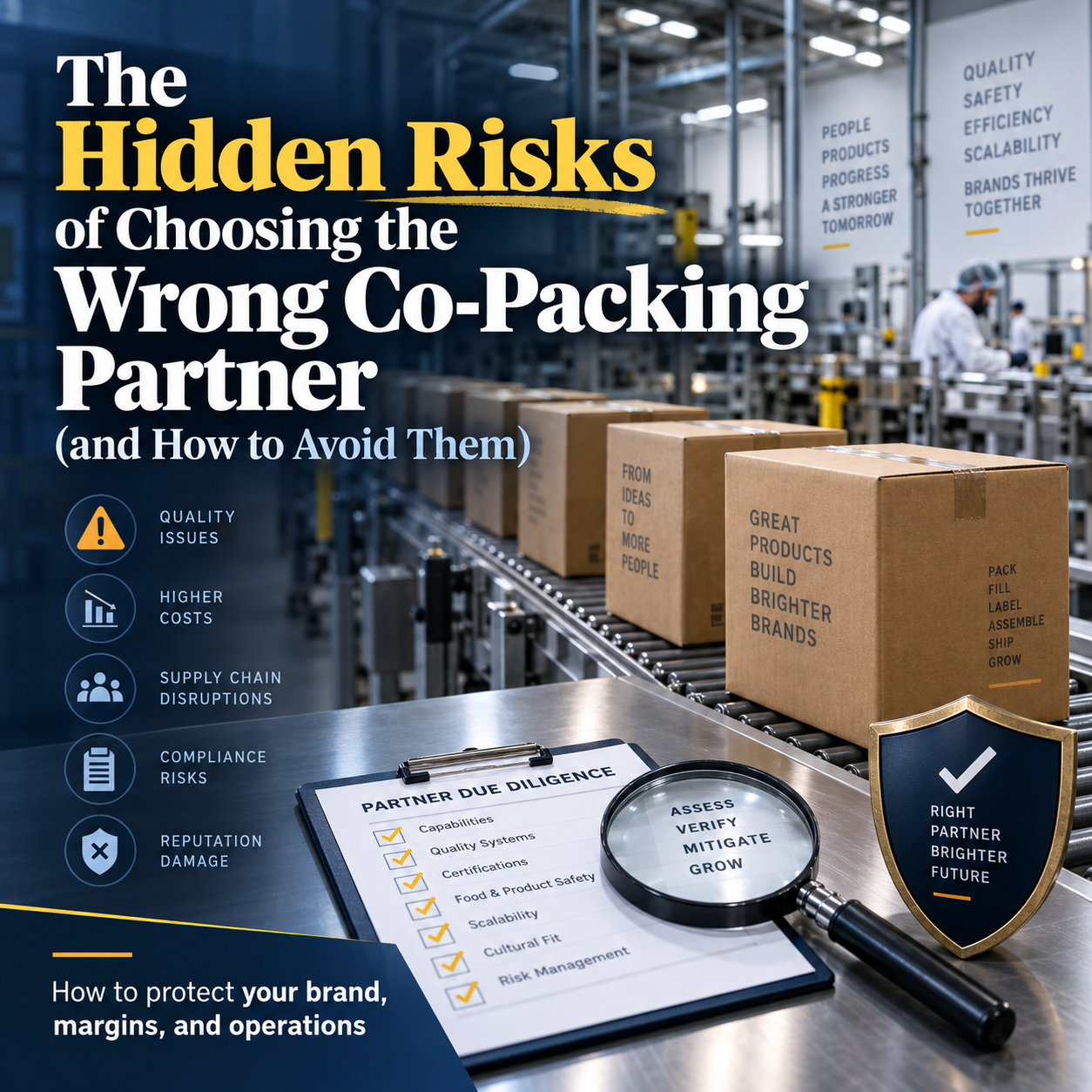
Choosing the wrong co-packing partner is not simply a matter of hiring a company that is too small or too expensive. It means choosing an operation whose capabilities, processes, and commitments do not match your needs.
For growing brands evaluating co-packing services, these seven risks deserve attention before the first production run.
A co-packing quote is only useful when you understand what it includes. Production, transportation, testing, and storage can involve separate charges. Penn State Extension identifies these as important financial considerations when evaluating a co-packing arrangement.
How to avoid it: Request an itemized quote covering setup, changeovers, packaging materials, production, quality checks, storage, and shipping preparation. Ask which charges are fixed, which depend on volume, and what circumstances trigger additional fees.
Compare proposals using the same product specifications, quantities, and service requirements. Then evaluate the total cost per accepted, sellable unit, rather than the processing fee alone.
For example, a hypothetical $5,000 production bill divided by 10,000 accepted units equals $0.50 per unit. If only 9,000 units are acceptable and the bill remains unchanged, that figure rises to approximately $0.56—before replacement production or freight.
Co-packers differ in equipment, scale, and capabilities. A provider that performs well with one product or packaging format may not be the right fit for another. Cornell highlights these differences as a central consideration when selecting a co-packing partner.
How to avoid it: Request a trial run using your actual product and intended packaging materials. Agree on acceptance criteria before the trial begins.
Depending on the project, evaluate fill accuracy, seal integrity, label placement, lot-code readability, appearance, and case counts. Ask how these checks will continue during routine production—not just during the demonstration.
Require written approval before changes to materials, specifications, or production methods. The goal is not simply to approve an attractive sample. It is to establish a repeatable standard for every order.
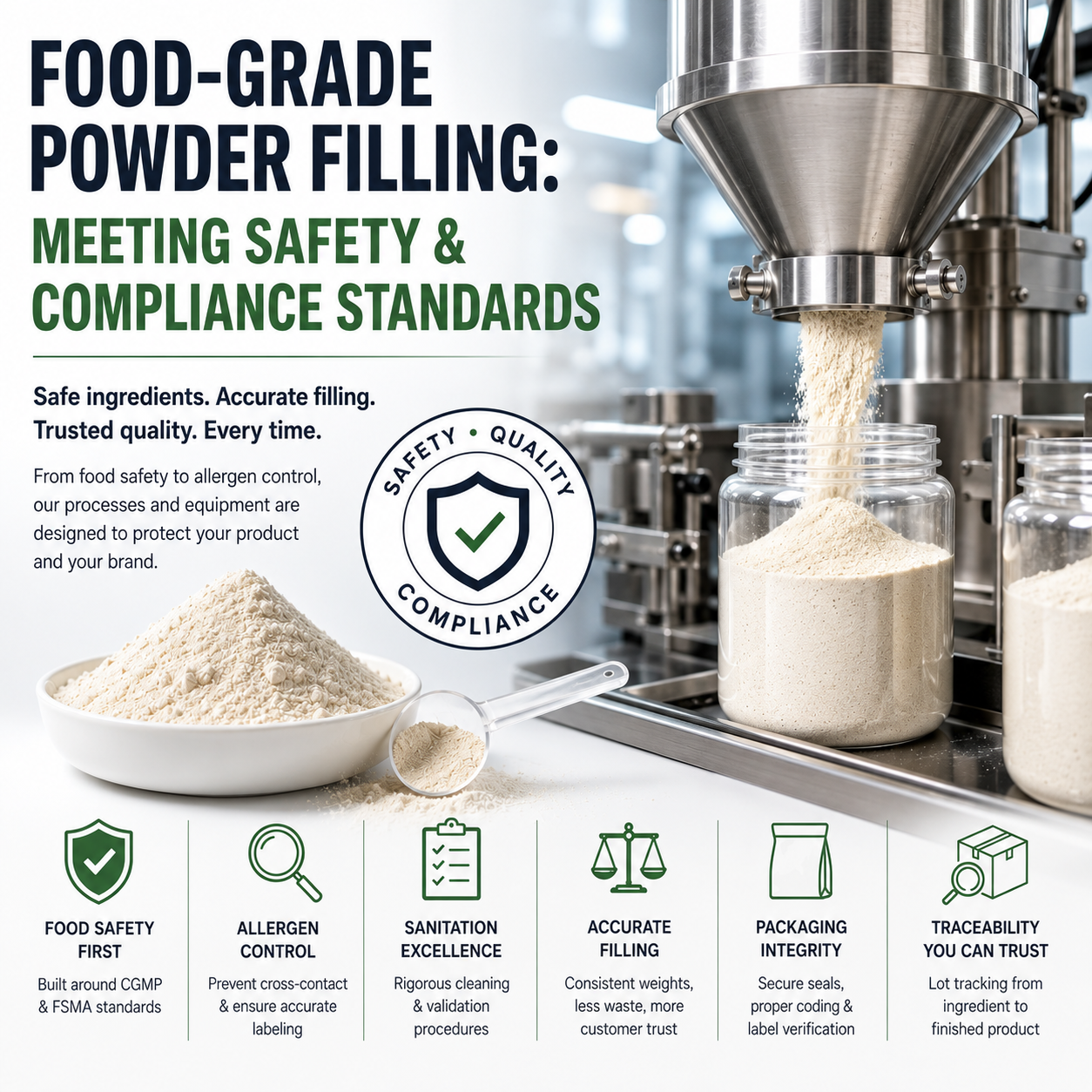
For human food products, incorrect allergen labeling and allergen cross-contact can create serious safety concerns. FDA inspections specifically examine these controls, and identified problems can lead to recalls or other enforcement action.
How to avoid it: Have your quality or regulatory lead evaluate the requirements applicable to your product and the proposed facility.
Request relevant food safety documentation, sanitation procedures, inspection history, and current third-party audit information where applicable. Check that any certification presented covers the actual facility and activities your project requires.
Define who approves labels, verifies packaging versions, evaluates deviations, and authorizes product release. For pet products, confirm the applicable animal-food requirements rather than assuming human-food documentation covers the project.
Do not treat a certification logo as a substitute for understanding how your product will be handled.
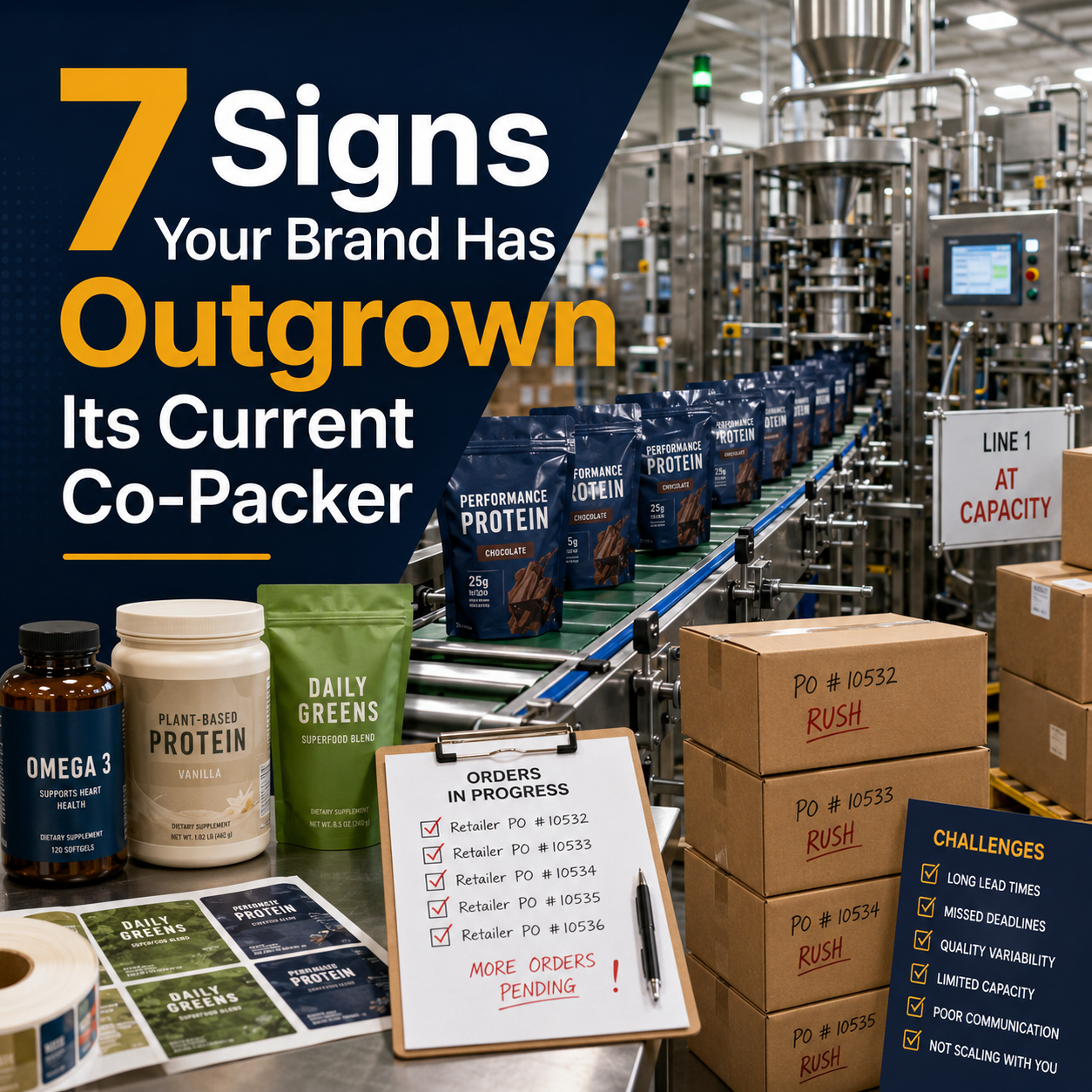
A facility’s maximum output is not the same as capacity available for your orders. Existing commitments and seasonal demand matter. Oklahoma State University recommends evaluating excess capacity and whether a potential co-packer’s seasonal production demands complement your own.
How to avoid it: Share realistic forecasts, order frequency, promotional plans, and anticipated growth. Ask how much capacity the partner can commit to your business—not simply how fast its equipment can run.
Document production windows, material deadlines, minimum order quantities, and procedures for urgent changes.
Also request a disruption plan. Who contacts you when equipment fails? What alternatives are available? How will the revised schedule be agreed upon?
A useful commitment should explain both the normal process and what happens when that process breaks down.
When a product issue appears, you need to identify the affected lots and where they went. FDA describes effective traceability as a way to identify and remove potentially contaminated food more quickly.
How to avoid it: Ask the prospective co-packer to demonstrate how it connects incoming materials, production records, finished goods, and outbound shipments.
Request an example inventory report showing quantities by item and lot, including stock that is available, allocated, or on hold. Establish how shortages, damage, production losses, and count discrepancies will be reported and reconciled.
Ask to review a recent mock recall or traceability exercise where appropriate.
“We track everything” is not enough. You should understand what information is recorded, how quickly it can be retrieved, and how your team will access it.
When responsibilities are vague, problems become harder to resolve. Penn State Extension emphasizes clear communication and written agreements to reduce misunderstandings in co-packing relationships.
How to avoid it: Assign a primary contact on each side and establish a regular reporting schedule. Define who owns material purchasing, artwork approval, scheduling, quality decisions, and shipping coordination.
Set expectations for urgent notifications. A production delay or quality hold should trigger a clear escalation process rather than wait for the next routine update.
Agree on a small set of performance measures, such as on-time completion, accepted output, inventory accuracy, and corrective-action closure.
Most importantly, document how disputed charges, rejected products, and rework will be handled. Accountability should be established before a problem occurs, not negotiated during one.
Selecting a partner also means considering what happens if that company can no longer support your business. Oklahoma State University recommends examining a co-packer’s financial stability and using confidentiality agreements before sharing sensitive product information.
How to avoid it: Discuss continuity planning, backup arrangements, and the process for transferring work before making a long-term commitment.
Have qualified counsel review confidentiality, ownership, termination, and transition provisions. Clarify ownership and access rights for artwork, tooling, specifications, unused materials, finished inventory, and production records.
Define notice periods, final inventory reconciliation, and the process for returning or transferring your property.
Maintain accessible copies of approved specifications and essential project documentation. A strong partnership should support operational continuity without leaving your brand unnecessarily dependent on one provider.
Before signing, evaluate evidence rather than relying on a sales presentation. Tour the facility, review a representative trial run, and request references from customers with comparable products and production needs.
Use a simple scorecard covering product fit, quality controls, available capacity, communication, traceability, and total cost. Establish your nonnegotiable requirements first so an attractive price cannot outweigh an unacceptable operational risk.
The right question is not, “Can this company package our product?”
It is, “Can this company consistently meet the requirements our business depends on?”
Elite Printing & Packaging, Inc. offers printing, packaging, co-packing, and fulfillment services, including pouching, filling, labeling, kitting, lot tracking, and inventory management. Its stated capabilities include work with human food and pet products.
Bring your product specifications, packaging format, expected volumes, and target schedule to the conversation. Use those details to evaluate the right production approach and define expectations before work begins.
Protect your next production run from avoidable surprises. Contact Elite Printing & Packaging today to discuss your co-packing project and request a tailored quote.

Bring your vision to life with custom flexible packaging, labels, and retail-ready design.

Premium materials and finishes that elevate your brand.

Efficient, compliant, and versatile co-packing for pet and human products.

From warehouse to doorstep — done right, every time.
Bring your vision to life with custom flexible packaging, labels, and retail-ready design.
Premium materials and finishes that elevate your brand.
Efficient, compliant, and versatile co-packing for pet and human products.
From warehouse to doorstep — done right, every time.